

Wow, it’s hard to believe that your once tiny newborn is now a toddler! At 15 months, your baby is in the midst of the toddler years, which bring with them many new and exciting milestones. They will continue to learn new skills and their little personality will come into its own. This article will walk you through these new milestones, give you tips on feeding and sleeping, and show you activities you can do with your 15-month-old baby.
At 15 months, your toddler has made great strides in his development and is constantly reaching new milestones. His mobility will increase and his personality will continue to grow and shine. Some milestones your 15 month old is expected to reach include:1
- Take a few steps or Constant walking without support
- Feeding yourself with your fingers and trying to feed yourself with cutlery
- Try to use objects correctly, such as feigning make a phone call
- Stacking two or more blocks on top of each other
- Show and ask for help
- Say one or two additional words other than “mommy” and “daddy” (for example, they might say “ball” or “dog”)
- Follow simple instructions like “Find your shoes”
- Clap when excited
- Imitating older children
- Expression of frustration with Tantrums
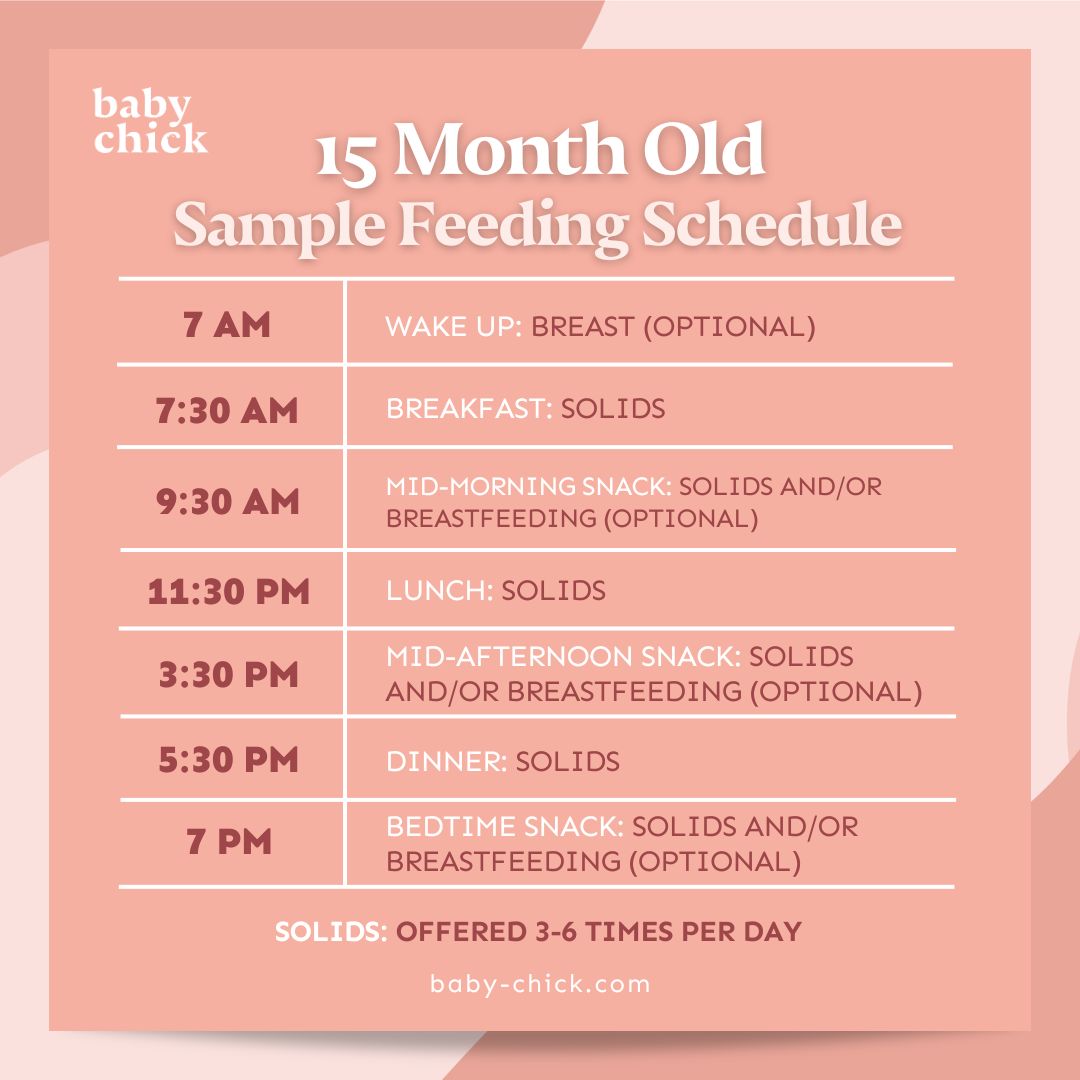
At this age, your 15-month-old is developing a taste for the foods he likes and doesn’t like. He will continue to eat three meals a day and have two to three snacks throughout the day. His mealtimes will be based on the mealtimes of the rest of the family. He will show his dislike for a particular food by pushing it away, closing his mouth when it is offered, or turning his head away from it. It’s important to continue to introduce your little one to new foods, but don’t force him. Give him the opportunity to explore new foods and make his own choices about which foods he wants to eat.2
As your baby begins to express his likes and dislikes, you may wonder what foods he should and should not eat. At this age, your toddler should be transitioned from formula to whole milk or unsweetened soy milk, or continue to receive breast milk and drink 450-700 ml of milk daily. He may also have water when they are thirsty. Your 15-month-old should also drink milk and water from a cup. Continue experimenting with Straw cup360 cups and open cups. Avoid other plant-based milks such as oat, rice or coconut milk. These milks are not fortified and do not contain the right amounts of protein, vitamins and calcium. Your little one also does not need infant formula or milk specifically for toddlers; he gets all the nutrients he needs from his regular diet.2
At this age, toddlers are often “picky eaters. Make sure your toddler’s diet includes a wide variety of foods from all food groups. Offering a range of foods will allow him to discover new tastes and textures. Make sure you include fruits, VegetablesProteins and dairy in your toddler’s diet. When introducing your child to new foods, it’s also important to avoid certain foods, including foods high in sodium, foods with too much added sugar, diet drinks, unpasteurized juices or dairy, and choking hazards like hot dogs, raw carrots, popcorn, and nuts.2 A good rule of thumb is to offer your children a varied range of foods each week. Your job is to offer them healthy food and they decide what they eat.
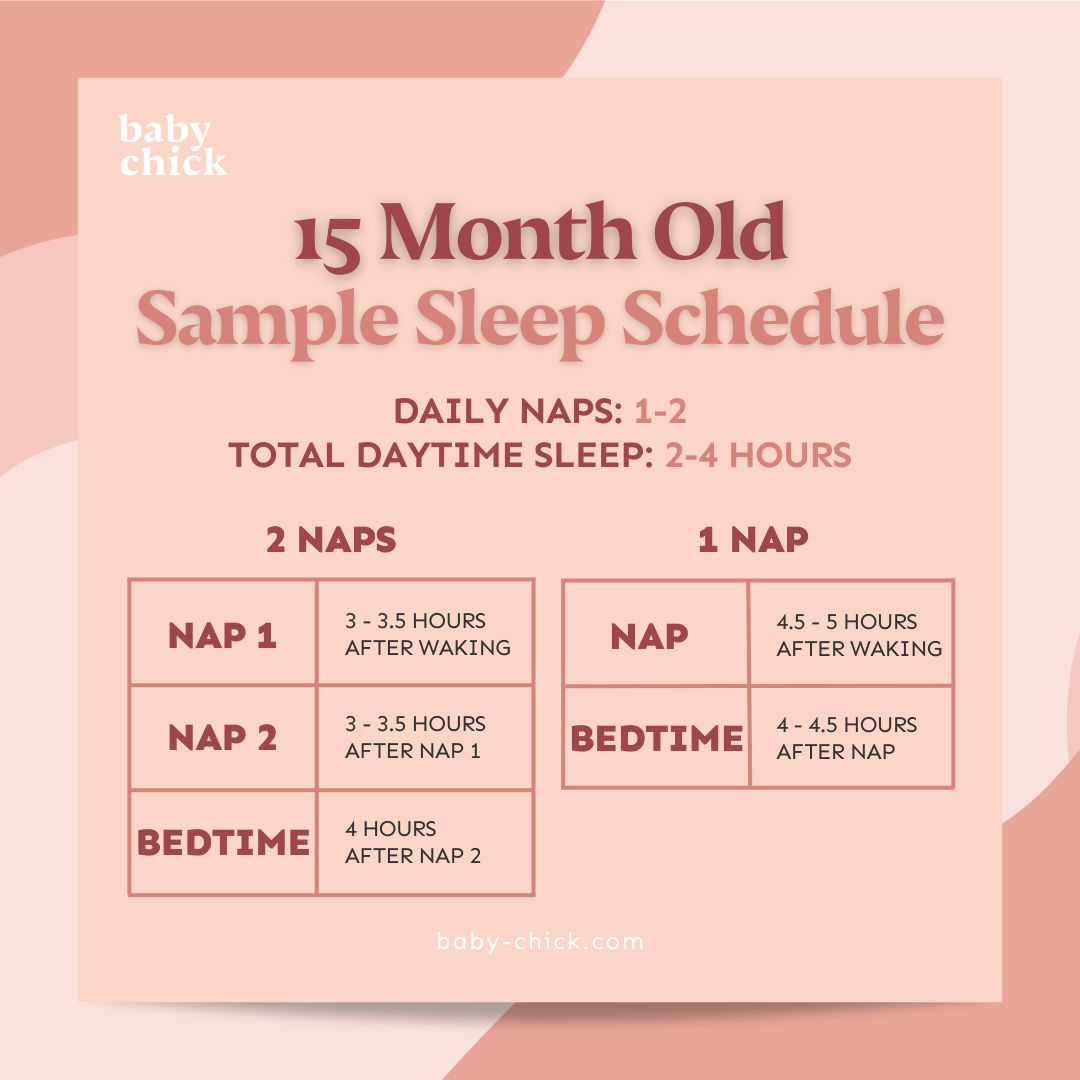
During the first year of toddlerhood, your toddler’s sleep schedule and patterns typically remain the same. Your 15-month-old needs 11-14 hours of sleep daily, including a nap that lasts about two to three hours. Many babies will move up to one nap per day by 18 months of age. Bedtime around 7:30 p.m. is still suitable for your toddler.3
Sleep regression can occur at any age, so your 15-month-old child may experience another regression phase. It happens when your baby, who is normally a good sleeper, Sleep patternsbegins to have difficulty falling asleep and staying asleep. Common causes are teethingIllness, a change in daily routine, or a major life change such as moving to a new home or bedroom. Fortunately, sleep regression only lasts an average of two to four weeks.4
Sleep regression is hard for everyone involved, but there are ways you can help your toddler overcome it. Sleep training is safe if your family wants it, but do what feels right for you.8th Some options for sleep training include:4
- Do not let your child sleep in your bed as this can prolong the sleep regression phase
- Maintain a consistent bedtime and Bedtime routine
- Removal Screen time Before going to bed
- Incorporate relaxing activities into the bedtime routine, such as bathing, reading or singing quietly Lullabies
- Put your child to bed when he or she is sleepy but not yet asleep so that he or she learns to fall asleep on his or her own
- If your dog wakes up during the night, let him whine for a few minutes before comforting him (this will teach him to soothe himself).
- Soothe your child in his or her crib instead of picking him or her up when he or she cries.
- Make sure your child has access to his or her favorite items, such as a blanket or a favorite stuffed animal.
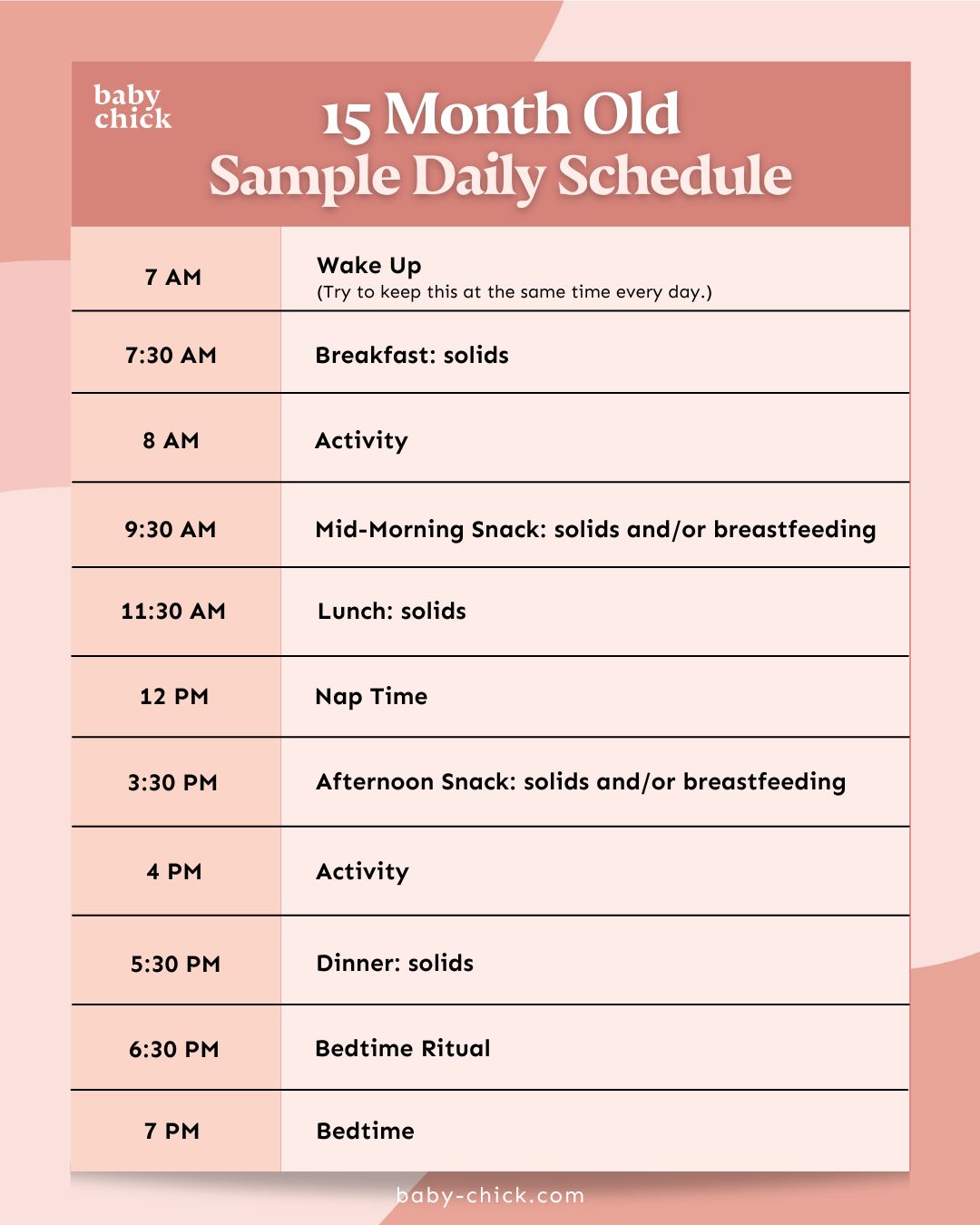
A schedule gives your toddler structure and stability. This helps your little one anticipate what will happen next in his day and can help relieve some tantrums.
It is important that you try to keep the same wake-up times, meal times and bedtimes during the week and on the weekend. If your baby one nap per dayThis nap can begin around 12 or 1 p.m. and usually lasts two to three hours. One nap instead of two naps a day will give your 15-month-old longer periods of wakefulness. A 7:30 p.m. bedtime is still recommended for toddlers this age.3
It’s okay to change your routine every now and then for a special occasion, as long as you keep in mind that you may experience increased emotions and tantrums associated with the change for a short period of time.
At 15 months, check-ups and vaccinations are no longer foreign words for you and your child. Your toddler will have another check-up at this age to assess his development and administer any necessary vaccinations. Vaccinations Your 15-month-old child will receive, among other things:5
- DTaP: Diphtheria, tetanus and acellular whooping cough
- HiB: Haemophilus influenzae type b
- PCV: Pneumococcal conjugate vaccine
Even with a check-up, your 15-month-old will likely get many common childhood illnesses. These include colds, stomach flu, and other viral infections. Although these illnesses can usually be treated at home, it’s important to remember that you should not give infants aspirin or over-the-counter cough and cold medicines. These medications are not intended for infants and can cause serious side effects.6 Always follow the instructions on the package insert. If you have any questions about which medicines you can give your child, contact your clinic.
While your toddler can easily overcome most childhood illnesses, some symptoms require immediate medical attention. These symptoms include:6
- Inconsolable crying
- Extreme sleepiness and difficulty waking up
- Weak crying or moaning
- Refusal to eat or drink anything or only consume small amounts during the day
- Dark yellow urine, fewer wet diapers, no tears or dry mouth
Call 911 if your baby has trouble breathing, has an unusual skin color (e.g., is very pale, blue, or gray), or becomes unconscious.6
Playing games and other activities with your 15-month-old is a great way to help him reach his milestones. Some ways to play with your toddler include:1
- Respond to their attempts to talk by repeating the sounds and words they make
- Tell them the name of a toy before giving it to them
- Let them help with simple tasks, such as cleaning up their toys
- Sing songs and show your baby some dance steps that he or she can imitate.
- Dancing with them through the room
- Read books
- Play hide and seek
- Teach them desired behavior, such as how to gently pet an animal
Your toddler is constantly on the move and will no longer stay where you put him. You need to create a safe environment for him to explore. Here are a few tips to help you keep your toddler safe while still allowing him to explore:7
- Keep all cords, fragile items, medications, household cleaning products, choking hazards, and hot or sharp objects out of reach.
- If your toddler has ingested any harmful substances, contact Poison Control immediately at 1-800-222-1222.
- Use safety gates at the top and bottom of all stairs.
- Prevent drowning by keeping all toilet lids closed and supervising your baby while he or she is in the bath or near water.
- If there are weapons in the house, keep them unloaded and locked in a secure cabinet.
- Use a rear-facing car seat and place it in the back seat.
- Apply SPF 30 Sun protection before playing outside and reapply every two hours.
- Do not smoke near your baby or allow others to smoke.
Your baby is now a toddler and has developed truly amazingly. Your 15-month-old is acquiring new skills and reaching new milestones almost every day. Watching them grow into toddlers is an incredible gift and it only gets better from here on out!


Leave a Comment