

A lot of fun and exciting milestones happen pretty quickly during your baby’s first year of life. One of those exciting milestones is when your baby starts pulling himself up and standing up. With each new milestone, questions about that milestone don’t go far behind.
Parents often ask themselves, “When do babies start standing?” or “At what age does my baby start pulling himself up and standing up?” Still others may ask, “What happens next after my baby starts moving into a standing position?” If you’ve ever asked yourself these questions about your baby, don’t worry. This article will help you understand this unique milestone and navigate this new phase in your baby’s development.
Before your baby begins to pull themselves up into a standing position, they need to start putting weight on their legs. When your baby is six months old, you will notice that he begins to put weight on his legs when you hold him under his arms on a hard surface. They will probably bounce on their legs when you hold them.1
During this time you can Engage your baby by showing them their surroundings and telling them more about their surroundings. Tell them the colors or shapes of their toys or the names of the objects they see. Your baby is curious and everything in the world is new to him, so this will be a fun and exciting way for him to play.2
When do babies pull to stand?
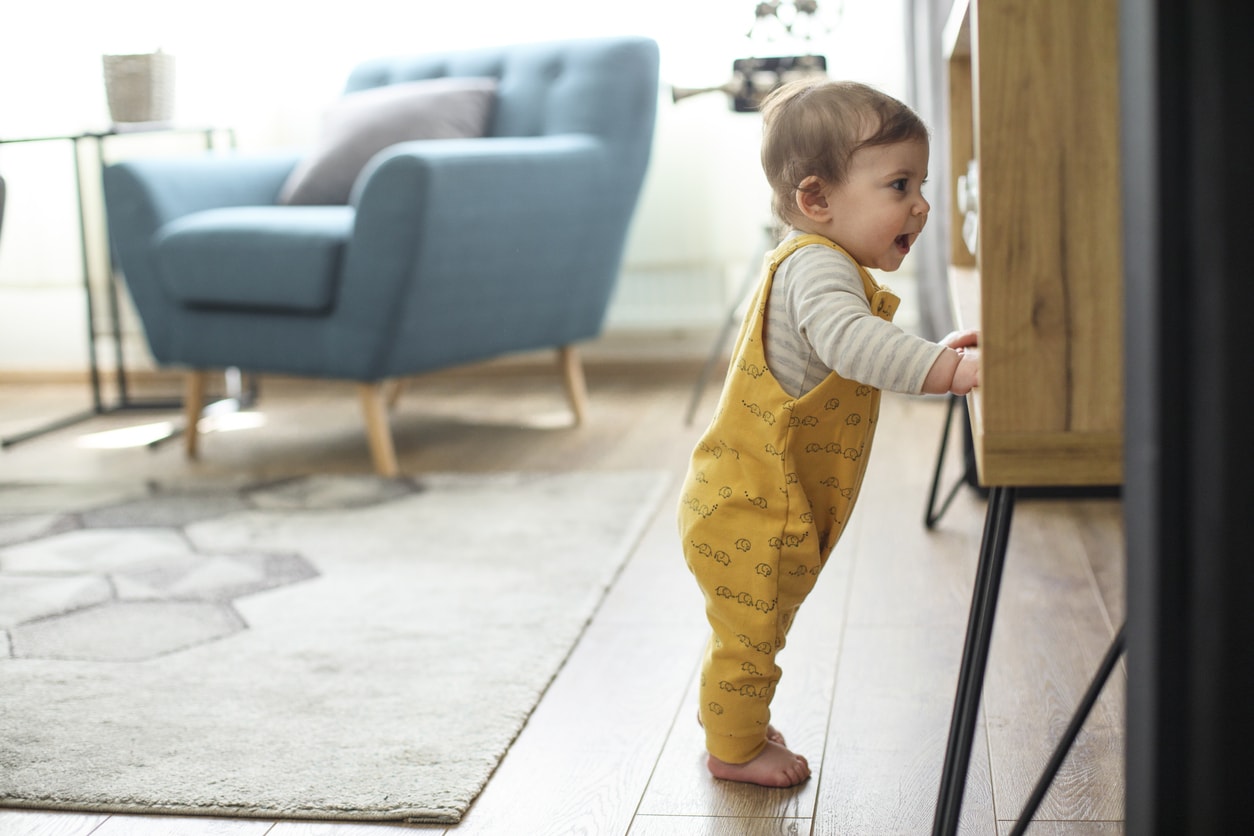
Once your baby has gained confidence in standing with support, the next milestone they will reach is pulling themselves up to stand. Many babies start pulling themselves up to stand between the ages of nine and twelve months. Babies pull themselves up on furniture or another stationary object, putting one foot in front of the other.3,4,5,6
How can I help my baby stand?
To help your baby gain confidence and strength in their stance goYou can incorporate some of the following into your baby’s daily routine:4
- Allow your baby to push objects around, such as push toys.
- Hold toys at a distance to encourage them to come toward you.
- Allow your baby to hold your hands while practicing walking or standing.
- Place toys at the other end of the couch to encourage your baby to approach the toy.
- Do not use a baby walker! Even if you keep an eye on your baby, serious injuries can occur.
What’s next after my baby starts standing up?
Buckle up because once your baby starts sitting up, walking is just around the corner. As your baby approaches 9 to 11 months of age and he is pulling himself up on the furniture to stand, he will begin to walk or walk around.3
You can expect your baby to begin standing without support around 11 to 12 months of age. They begin to explore standing by releasing their support for a few seconds before lowering themselves to the ground or holding onto the support again.3
As your baby learns to stand without help, he or she will begin to take a few assisted steps. They begin walking while supporting themselves with one hand on an object or your hand. Remember that their legs are still learning to support their weight. Therefore, although falls are common, they do not usually result in injuries.3
Is it harmful to hold a baby standing?
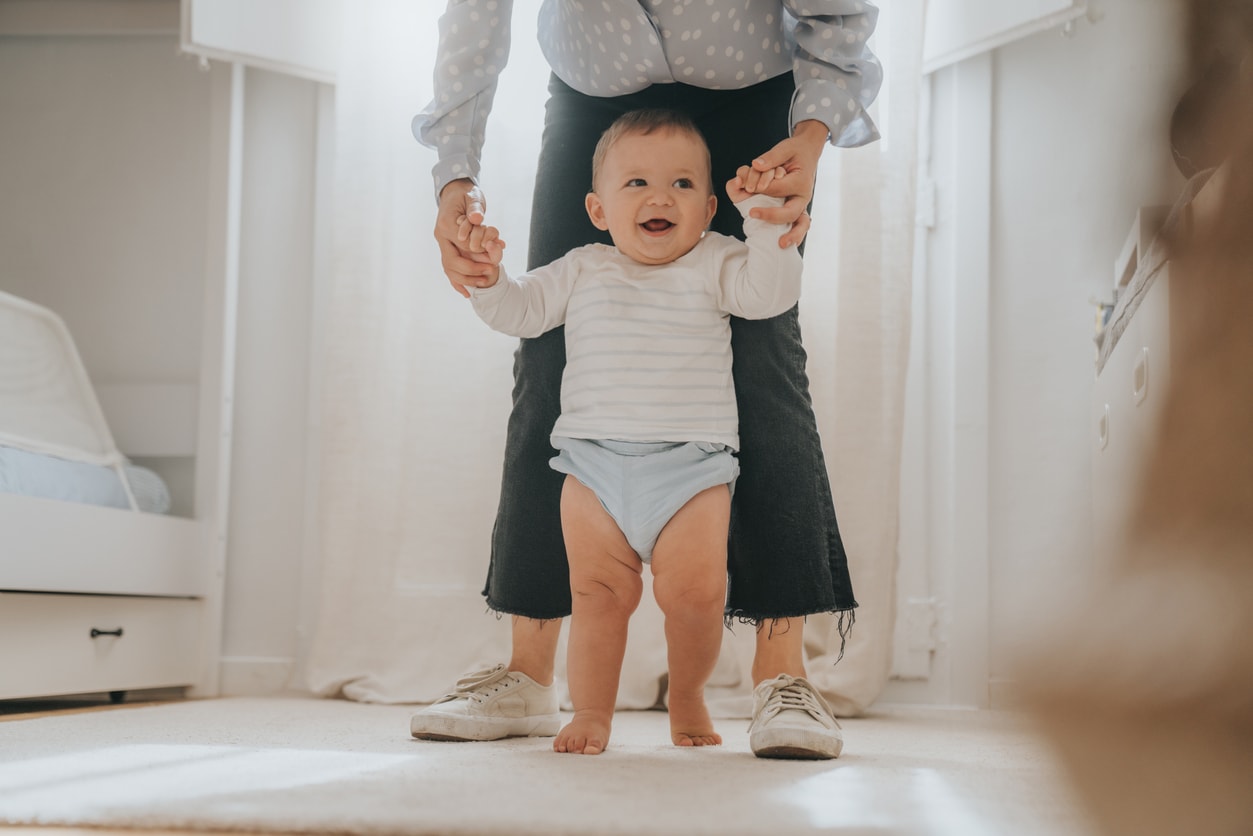
Many parents hold their baby’s hands to help them practice their standing and walking skills. While it’s safe to hold your baby’s hand while standing or walking, it’s not recommended to pull them up off the floor by their arms.7.8
Pulling a baby or toddler up by their arms can lead to a condition called nanny elbow. This condition most commonly occurs in children under 4 years old when they are pulled into the air by their hands or arms. Nanny elbow occurs because babies and toddlers have loose ligaments in their elbow joints. When lifted by the arms, the bones in the elbow move apart and the ligament can slip between the bones and become stuck.7.8
In this case, you may notice that your baby doesn’t want to move his arm or keep it straight or slightly bent. Swelling is not always present, but the affected elbow may be sensitive to touch or movement. If any of these symptoms occur, seek medical attention immediately. Nanny’s elbow is easily treated with immediate medical attention.7.8
What to do if your baby doesn’t stand?
One of the most important things to remember about your baby’s development is that each baby reaches their developmental milestones at their own time and pace. These milestone steps are merely a guideline for evaluating development, not a rule.
Every baby has a unique timeline for reaching milestones. Some babies reach certain milestones earlier or later than their peers. Just because your baby isn’t able to stand up at exactly nine months doesn’t necessarily mean that this is the case backward in terms of development.
During your checkups, your doctor will ask you questions and examine your baby to monitor his development. If you have any concerns, contact your doctor. They can help point you in the right direction if your baby needs extra help reaching these milestones.9 You can track your baby’s development use this CDC online milestone checklist.
Watching your baby learn to pull himself up is a joyful event for you and your baby, and you can be expected to care about his progress. It’s important to remember that every baby develops at their own pace, and that’s okay. Take time to enjoy the joy of watching your baby explore new areas of their environment and celebrate their newfound skills.


Leave a Comment