

Congratulations! You’ve made it through your baby’s first year! Take some time to admire what your baby has accomplished in the past year and learn about what he’s going to accomplish in the future. This article will walk you through the new milestones your 12-month-old baby will reach, and give you insight into how his feeding schedule and sleeping habits might change, his average weight, activities you can do together, and more.
Over the past few months, your baby has become very mobile, and this month will be no different. He will continue to develop his mobility and grow his independence. Some new developmental milestones your 12-month-old baby will reach include:1
- Play games like “peek-a-boo” and “cake baking” with the carers.
- Understanding the word “no” and hesitating when saying “no”
- Continue babbling, with some real words like “Mama”, “Papa” or “Baba” (for bottle)
- Pull up to stand
- Walking around while holding on to furniture (also known as “cruising”)
- Putting toys in and out of containers
- Looking for hidden toys
- Feed yourself with finger food
- Drink from a cup without lid (with some help)
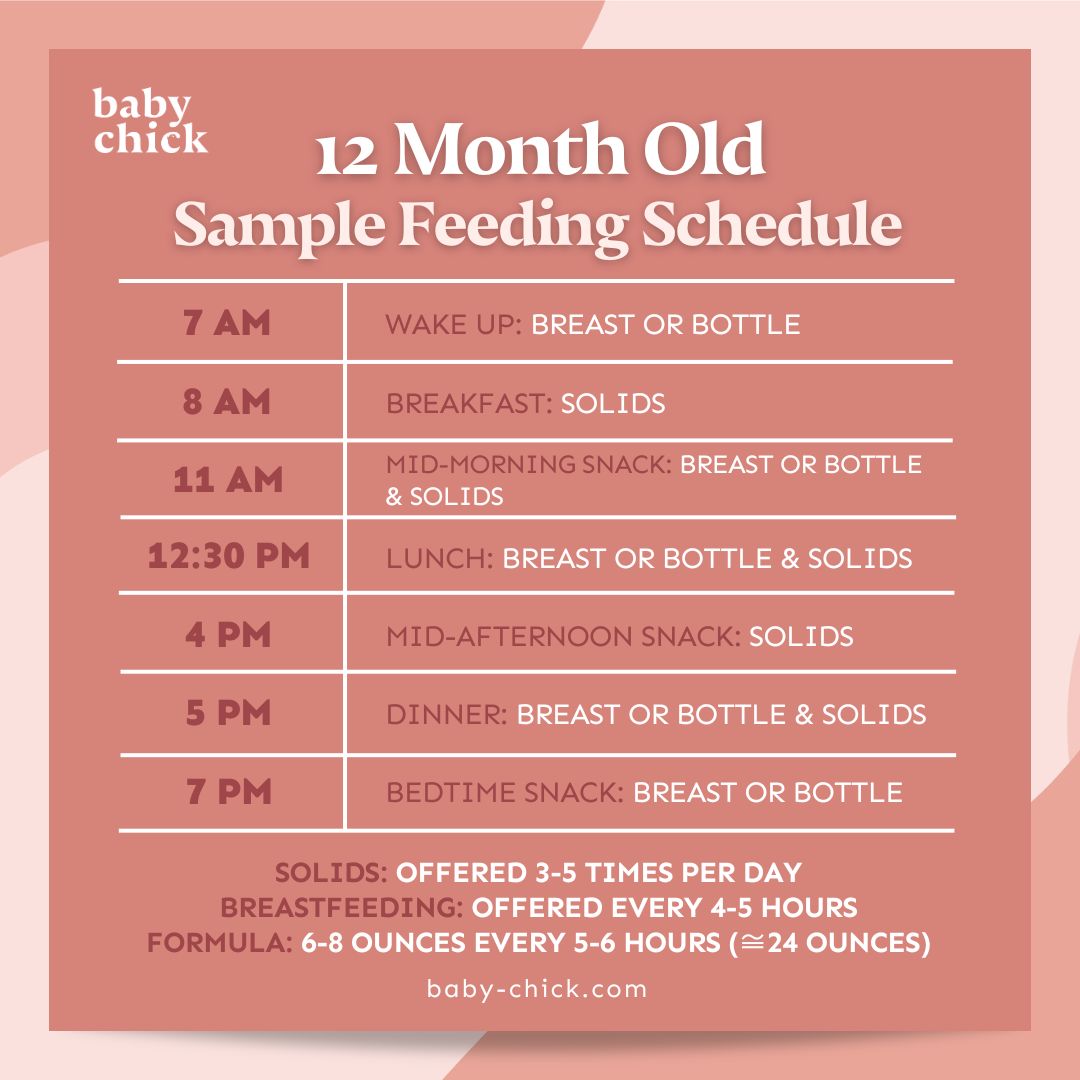
Now that your baby is 12 months old, he or she can transition from breast milk or formula to whole milk. If he or she is on breast milk, you can continue to do so as long as there is a supply and your baby still wants breast milk. He or she can also begin transitioning from a bottle to a sippy cup. To ease the transition, offer your baby cow’s milk, breast milk, or water in a sippy cup instead of a bottle at mealtimes, and slowly reduce the number of bottles offered. Often, the last bottles you give your baby are the ones before nap/bedtime.2
To ensure your baby gets enough solid food, limit cow’s milk intake to 450-700 ml daily.2 Other foods to avoid include sugar-sweetened or diet beverages, high-sodium foods, and unpasteurized dairy products or juices. Also avoid hot dogs, raw hard vegetables, hard cheese, popcorn, nuts, and grapes, as these pose a choking hazard.2 If you want to give your baby juice, limit the amount to 120 ml per day and make sure it is 100% fruit juice.1
Juice is not a must for children; think of it more as a treat! The reason to limit juice is because the sugar is usually not necessary for the body and can be detrimental to teeth and oral health.11 However, if your child is sick and not feeling well enough to eat/drink, juice or other sugary liquids (such as oral rehydration solution or ORS) may be appropriate to help maintain the child’s fluid balance and keep his or her blood sugar levels within normal range.12
Coming up with meals for your 12-month-old can be challenging, so here is a sample menu to give you some ideas for your feeding schedule:3
- ½ cup iron-fortified infant formula
- ½ cup whole milk, breast milk or water
- ½ banana or 2-3 pieces of fruit cut into small pieces
- ½ cup whole milk, breast milk or water
- 1 piece of bread with cream cheese or peanut butter
- ½ cup yogurt
- ½ cup cooked green Vegetables
- ½ cup whole milk, breast milk or water
- 2–3 ounces of protein such as chicken, turkey or eggs
- 1-2 ounces cheese
- 2-3 pieces of fruit
- ½ cup whole milk, breast milk or water
- 2–3 ounces of protein such as chicken, turkey, beef, beans or eggs
- ½ cup cooked yellow or orange vegetables
- ½ cup grain or starch such as rice, pasta or potatoes
- ½ cup whole milk, breast milk or water
In addition, many babies at this age drink a cup of whole milk or breast milk before going to bed.
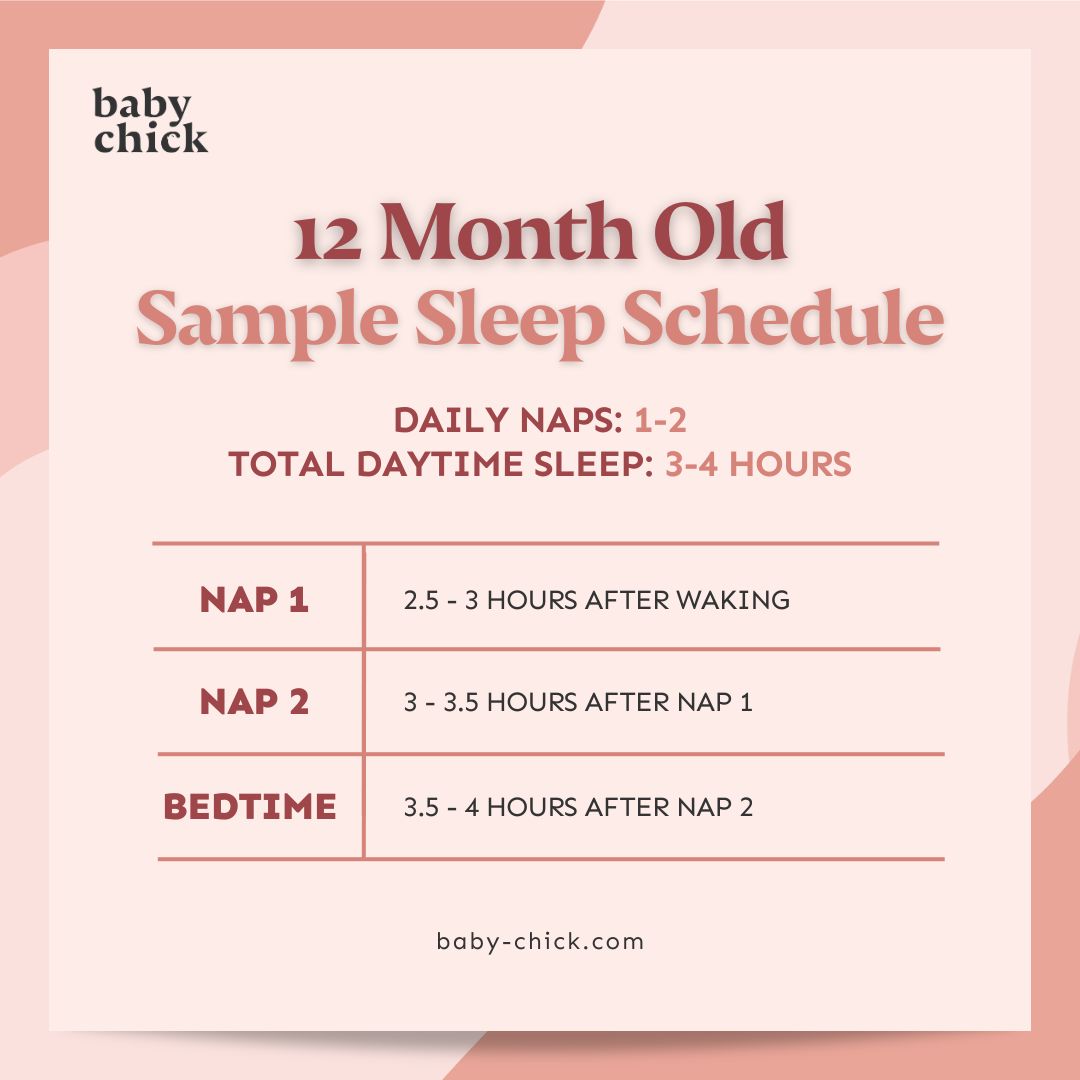
Your 12-month-old’s sleep schedule will be very similar to that of previous months. He will need 11-14 hours of sleep per day, which includes one or two naps during the day.4 Some 12-month-old children are one nap per dayand some stay with two naps a day; it depends on your baby!5
You may have thought that Sleep regression is a thing of the past at this age, but unfortunately some 12-month-old babies experience another phase of sleep regression. Sleep regression occurs when your baby’s sleeping habits change. He may become more restless at night or have difficulty falling asleep. Some of the most common causes of sleep regression include:6
Fortunately, sleep regression doesn’t last forever. Sleep regression cycles typically last one to four weeks. Some ways to help your 12-month-old overcome his sleep regression include the following:6
- Do you know your Sleep signals and put them to bed at the first sign of tiredness.
- Stick to regular bedtimes and nap times.
- Maintain a consistent daily and Bedtime routine.
- Give them special attention during the day and before bedtime to help them with separation anxiety.
- If your family feels it is right, it is okay to let your child whine for a few minutes in the middle of the night before calming him or her down.
- Some parents limit cuddling, rocking and night feeding because these activities frequent awakening with your 12 month old child.
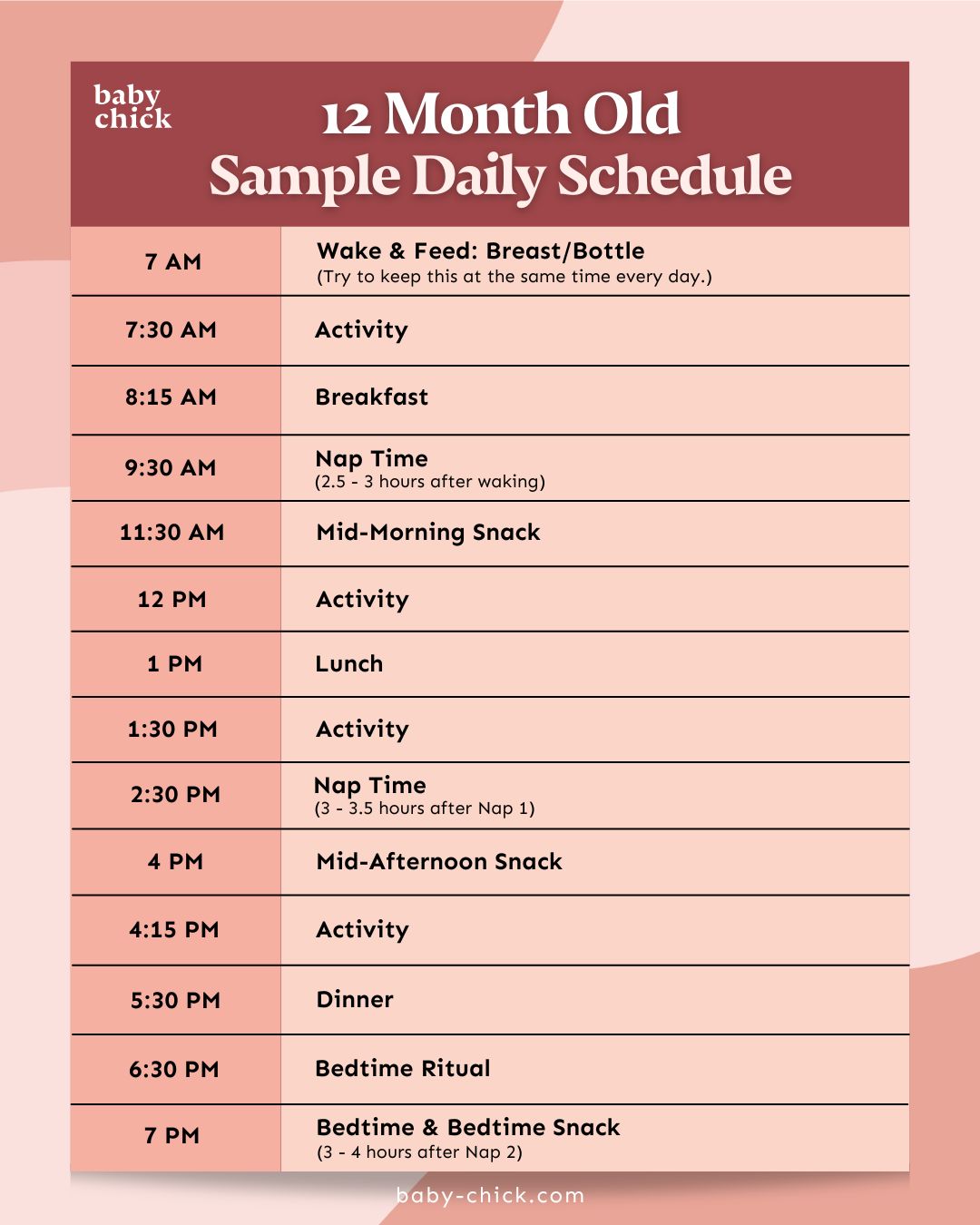
For the past few months, you and your baby have had a predictable schedule that is unlikely to change in the future. The only significant change may occur when your baby Transition to one nap per day instead of two. If your baby sleeps once a day, aim for a nap time at 1 p.m. or after lunch.5 Use a shortened version of the bedtime routine to help your little one prepare for nap time.5 By switching to one nap per day, some 12-month-old babies have longer Wake window than others.
At this age, it’s still appropriate for your baby to go to bed between 6 and 8 p.m., but every family has a different time when it comes to the right time. Start your bedtime routine early to make sure your little one is ready for sleep at bedtime.5
This month your baby will have his 12-month check-up. This includes a short physical examination, a weight check and the Administration of vaccinesOn average, a 12-month-old baby should have doubled his or her birth weight and grown about 25 cm.7 Your doctor will help you find out if your baby is growing normally and give you advice if growth is delayed.
During this visit, your baby will also receive the scheduled 12-month vaccinations. These vaccinations include:8th
- Measles, mumps, rubella (MMR)
- Hepatitis A
- Varicella, also known as chickenpox vaccine
- Annual flu vaccination (if required)
Even if your baby is scheduled for a check-up at 12 months of age, you may need to take your baby to the doctor if any of the following symptoms occur:9
- Decreased appetite for more than a few days
- Increased sleepiness, difficulty waking, or crying more than usual
- Temperatures above 40 °C or lasting longer than three days
- Diarrhea that lasts longer than a week or vomiting that lasts longer than a day
- Signs of dehydration such as fewer tears, dry/chapped lips and a lower number of wet diapers
- constipation
- Difficulty breathing, cold symptoms that last 10 days or longer, or a cough that lasts longer than two weeks
- Unexplained rash or rash with fever
Your baby will become even more expressive and interactive when he or she first birthdayand it’s so much fun to keep them busy! Some simple activities to keep 12 month olds busy include:1
- Read books to them, especially those with flaps
- Tell them what actions you are taking
- Sing to them
- Respond to all their chatter, even if you don’t understand what they’re saying
- Stack blocks with them, build the highest tower and watch them knock it down
- Promoting their love for Music by giving them toy drums, cymbals or other noisemakers
Make sure your home is a safe environment for your baby is crucial. As they become more mobile, they start doing things they shouldn’t do. Follow these safety tips to keep your baby out of harm’s way:10
- Keep all household cleaners and medicines out of reach (if accidentally ingested, call Poison Control at 1-800-222-1222).
- Reupholster or remove furniture with sharp corners.
- Install gates on all staircases.
- To avoid accidental burns, keep the temperature of your water heater set to no more than 120°F (49°C).
- Drain all water from the bathtub after use and never leave your little one unattended in the bathtub.
- If there are guns in the house, make sure they are always stored safely in a gun safe and unloaded.
- Use a rear-facing car seat that is properly secured in the back seat.
Your baby’s first year may seem to have flown by, but it has also been a year of tremendous growth for you and your baby! Each new stage of development is incredible to watch, and there are many more beautiful stages to come.


Leave a Comment